Thursday, October 26, 2006

You Rang?

I started writing about how tired I am, but that's whiny, and I hate that. So I worked a lot of hours in the last three days (42 1/2 out of 72 hours). So what? I signed on for this, at least for the near future. I can handle it.

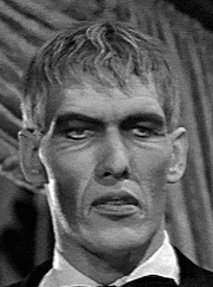
On the other hand, work is all I've experienced since my last post, so there isn't much to say, except that I'm still alive. I should be wearing a hockey helmet at this point, and I look a little like Lurch, but I'm good. Still upright.

On the good-news front, I'm diversifying at my day job, and my hours are no longer in jeopardy. It looks like I'll spend half the week in shipping and the other half in the marketing department writing book annotations. Not exactly a dream job, but I'm looking forward to it.

Today I spent more than two hours writing copy. Seems little, but in my life it's a huge leap.

Have to stop writing. Time to get some rest.

Sunday, October 22, 2006

Stray Cat Update

For the last six days our guest has commandeered our bathroom, terrorized the two cats who live here, and perforated my hands with her teeth and claws. She's also been a nuzzling, loving little ball of fur who's grown on us. Today, we may have found a home for the little beast.

Michele's sister and her fiancé, Future Brother In Law, have taken the kitten home for a one-week trial period. In other words, she may really become a good companion for the Demon Nephew. It sounds like the experiment is going well, and that makes me happy.

We like the kitten, but her presence here caused a few problems, not least of which being near-clinical depression in our cats, who really didn't want to deal with the Energizer Kitty with fistfuls of Ginsu knives. Staying with us was an option, but not the best one. I'm happy that--if she's finally found a permanent home--we can still see her from time to time.

Sounds like they've named her "Zoe." I like it. Somehow it fits. Of course, "Vibrating Ninja of Needly Doom" could also have fit.

Good luck, Zoe.

The Wall by Jean-Paul Sartre


If you're looking for light and fluffy, don't open this book. There's nothing dark or sinister about this collection of short stories, but Sartre--along with Albert Camus, among the most iconic existentialists--doesn't candy-coat anything.

The characters of these stories are believable and recognizable, and the settings are just well enough established to support what Sartre plans on examining: the misery of human existence. Most of Sartre's attention is focused on the characters' mental lives, and he brings them to life in ways that are both remarkable and mundane. Remarkable because he's so accurate, and mundane because what could be more familiar than human neuroses?

None of the characters are especially likeable, and none of the plots are that profound, but the importance of these stories lies elsewhere. Sartre avoids, as well as anyone ever has, the anti-intellectualism Milan Kundera has identified as that which demands anything from literature other than the aesthetic. This coincides with the basic premise of Sartre's brand of existentialist philosophy: life is what it is, and hell is other people, so suck it up, Sally.

I probably won't return to this collection often, but I'm glad to have read it. Somehow, seeing petty lives bathed in this weak, gray light makes me more content to be just one of six billion lice on Earth's scalp.

Friday, October 20, 2006

Bring it on.


I have a part time job, which will allow me to work an extra 20-25 hours a week. The good news is that I'll worry less about money. The bad news is that I'll become a stranger to Michele and the cats. However many of those there are.

Then again, maybe I'll be too tired to care.

Tuesday, October 17, 2006

Invasion

We have a houseguest.

I didn’t know her before yesterday, and either did Michele, but Michele met our guest on the way home from school yesterday, and she invited her up. She’s been here ever since.

We live in a small apartment, and space is at a premium. Every little bit of lost space is a serious loss, and we have certain bottleneck points. If both of us work in the kitchen at the same time, or if we want to be in the office at the same time, things are tough. The worst, though, is the bathroom. If Michele and I both want to brush our teeth at the same time I have to stand behind her so we can both see the mirror (because apparently that is a task easier performed if I can see my mouth). We can’t spare the space for anyone else.

The biggest problem is our guest’s always in the bathroom. She’s clogged the sink, and she wants to get in the shower with me. She’s cute, but I think that’s more trouble than it’s worth. Seriously, I wish we could figure out a way to get her home.

Actually, she's a sweetheart. I wish the people calling to claim her could identify her gender or something. Well, maybe she'll be a good companion for the Demon Nephew.

Thursday, October 12, 2006

I Have Not Found the Secret

When I was in fourth grade Ronald Reagan and Jimmy Carter were competing for the US presidency. I was nine years old, so I didn't have any idea why anyone would pick one over the other, but plenty of kids had gotten advice from their parents.
One kid said we shouldn't want Ronald Reagan to win because he was the devil. He said that because all of his names had six letters (Ronald Wilson Reagan) that he was the devil because that was 666 (sorry, Diana).

I thought that was kind of clever, but it didn't change my vote. Because I wouldn't have a vote until 1988 and I'd waste it on Dukakis.

Anyway, we found out later that Reagan was evil, but not because of the letters in his name. Now we have a new evil being occupying 1600 Pennsylvania Avenue. This morning I thought it would be fun to find anagrams of "George Walker Bush." I don't claim to be good at this, but I had some fun. Here's what I found:

Shelgo Weakburger

Weakburgers le Hog

He Logs Weak Burger

Rub Geek Ogre Walsh

Roger Wash Bug Leek

She Gag U Lube Worker

Blur Ogre Geek Wash

. . . and then there's my favorite:

Her Bowl Reeks U Gag


Seems about right. None of these anagrams give a clue, and I still don't know why he's evil, but I understand why he makes me gag. Her bowl reeks. Or something.

Wednesday, October 11, 2006

Feeling Strange

This is the first fall in ten years in which I didn't head back to school with everyone else. It took me three years just to figure out how to be a student, so I feel lucky to have finished at all. When Michele started classes a few weeks ago, and most of my MFA friends found teaching positions in various and sundry parts of the country, and my mom gritted her teeth and started her last school year before retirement, I felt strange.

I felt like I did that day in first grade when I missed the announcement for my bus, and subsequently missed my bus. I had a few options, and even as a first grader I solved problems in unorthodox ways. To solve this problem I got on another bus that I'd seen go past my bus stop, figuring I'd get off as close to home as I could and walk the rest of the way. The ride was uneventful, and when the bus stopped at the trailer park a couple of miles past my neighborhood I stepped off, ready for a long walk, armed only with my Blue Falcon and Dynomutt lunchbox.

Then the situation got really weird. My mom was waiting for me at that bus stop, the one that was not my bus stop. We had no plans in place for what to do if I missed the bus, so I couldn't imagine how she found me. It was like telepathy.

Actually, when I didn't get off my regular bus, Mom called the school, found out I wasn't there, and figured I got on this other bus. A little easier to explain, but still an example of amazing deductive powers.

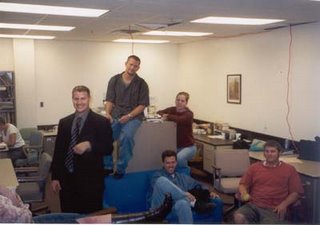
So now that I've let a simple simile run away from me, I'll get back to the point. I've been receiving photos by email, Jess's entire stock of MFA pictures involving people I know--especially the 206A crowd from 2003-2004. It was an office where little actual work got done, where darts were thrown too close to Katy's head, and where we all huddled between teaching sessions to teach each other how to teach. Good times.

So I've been missing school, and making it worse by looking at pictures like this one:


This was us in the beginning. Ben wore a suit every day so his students would take him seriously. Havely was chubby and short-haired, Megan still existed, and we had not yet upgraded to the cordless Brian.

It was the best work environment I've ever known, and thinking about it now makes me really dread going to work this morning. Ugh. Even with Michele stressing about her classes and getting ready for her general GRE on Saturday, I envy her. I'd trade places in a second.

Sunday, October 08, 2006

I Say "Happy," You Say "Shoot Me!"

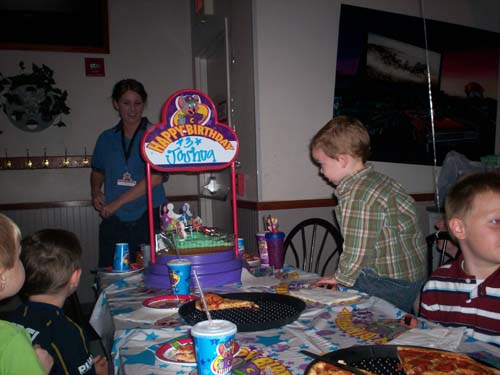
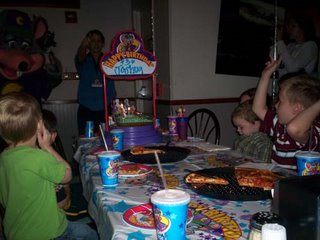
The Demon Nephew turned three earlier this week, so we all gathered at Chuck E. Cheese yesterday to celebrate the illusion that he was leaving the “terrible twos” behind. I can see why Mr. Cheese’s restaurant might appeal to a small child. Or a coked-up squirrel with ADD. What I can’t understand is the adults who voluntarily involve themselves in this enterprise—and that includes me.

First of all, I have to wonder what the suicide rate is among Mr. Cheese’s employees. I’m guessing the rate is a high number, like “6” or “a friggin’ lot.” If I was put in prison for an unspeakable crime and my punishment was that I had to chant that nonsense about “I say ‘Happy’ you say ‘Birthday’” I’d last about four minutes before I shivved myself. The unfortunates who can endure this ritual deliver their lines with all the enthusiasm of a stroke victim on thorazine, so they must have numbed themselves somehow.


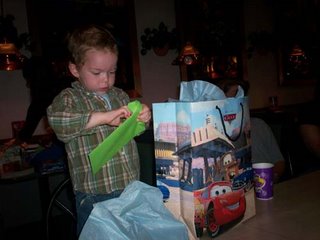
Then there’s the parents. They plan, they organize, they make a cake. They shell out a lot of money. And what’s the upshot? The kid doesn’t want his pizza, he’s bored with the festivities, he’s leery of the mouse with the giant head, and he tears through the presents like a thing that quickly tears through presents. All he wants is more tokens so he can pump them into a machine and cause it to make sounds and flashy lights and such. The children are unanimous about this.

As for the adults invited to the party: we know it’s not about us. We know Birthday Boy likes us, but sees no use for us in a place like this, except as maybe a token source. The best we can do is show up smiling, say “Happy Birthday” when Birthday Boy’s sugar-glazed eyes pause on us, and try to keep the kids from beating each other senseless with the new toy light sabers. We fend off the headache for as long as possible and wonder why Mr. Cheese didn’t have the foresight to build a soundproof room with lots of windows (by which we can observe the chaos) and a fully stocked bar.

Because this isn’t about us, though, there’s no reason not to allow the kids a couple of hours to go Lord of the Flies on a wicked sugar high in a padded, supervised environment. If Demon Nephew gets the green cake he wanted, and he gets some books along with his new cache of trucks, and nobody gets hurt, then I’ll call it a success.


Happy Birthday, Booger.

Saturday, October 07, 2006

Postscript to the Amish Entry

I was talking to a woman at work last week and she spouted one of those clichĂ©s that make my teeth itch. We were talking about the Amish school shootings and she said something like, “Think of all those poor innocent children.” I couldn’t talk for a minute as I swallowed the response that came to mind right away

I understand that people have been conditioned to spew this kind of tripe any time a child is involved in a horrific news story, and I indicated in my previous post how relevant I think the ages of the victims are, but here's my other question:

Are there guilty children? I mean, are there children who, if they had been involved in the Pennsylvania shootings, would have produced the following statement?

"Well, Roberts killed five little girls. That Amundson girl's a real shame, that's for sure. But don't feel bad about the other four. They had it coming."

Do we need the "innocent" in that equation? Can someone, no matter their age, have earned that? Can we cut the crap here?

Sorry. Pet peeve taking control again.

Sometimes I Want To Be Amish

Last Monday a gunman walked into an Amish schoolhouse, lined the girls up along the blackboard, and started shooting. Charles Roberts killed five people and critically wounded five others before eating a bullet himself. Why did he do it? Had these girls threatened or harmed him somehow? No. Had some other Amish girls caused him fear or anguish? No. In fact, nobody had done anything to him. In suicide notes he left, Roberts claims one of the reasons for his attack were his twenty-year-old memories of him molesting other little girls. Not them harming him, but him causing harm. Amazing.

I identify with the Amish people. You might wonder what a suburban atheist can possibly have in common with members of a sequestered religious community. The answer, unfortunately, is “not much.” Just a fondness for simplicity and an unbending pacifism. The Amish have separated themselves from mainstream society in order to avoid people like Charles Roberts, and to avoid producing people like him. I understand the urge to just walk away, to want a wall between me and everything else. And I almost did the same thing the Amish did.

In the late nineties I had two possible life paths in mind. The first was more conventional: Continue with college, get my degree, settle down to an average life where I tried to carve out enough time and space to explore the ideas that I found important. The second was a little less ordinary: I’d work long enough to pay off all my debts, then vanish and live as a hermit. It looks like a joke sitting on the page now, even to me, but I was serious about it. I hadn’t felt like there was a place for me in the Navy (it’s not a good environment for pacifists, believe it or not), and saw no improvement after my discharge. I couldn’t find peace of mind, and I figured I’d be better off outside of society.

It turns out there are few places to go and live the Diogenes lifestyle. Every resource and scrap of land has an owner and a price tag. To just relinquish everything but stay in the area isn’t an ascetic retreat—it’s homelessness, vagrancy. I’d still be subject to all the things I couldn’t bear in the first place, but now without the resources to survive them.

So I researched, and I found out that people still retreat to hermitages, and there are some places where it can be done. I had a choice to make—stay or go. A life of quiet, solitary contemplation or the struggle to keep pace with the contrived busy-ness of a “normal” life.

In the end, I couldn’t sever ties with my family and friends. I didn’t want to get away from everyone—I enjoyed the company of some people. It just seemed that most everyone else—the selfish, ignorant, mean-spirited masses—dictated society’s direction, and my kind of people sat apart, disconnected from that kind of influence.

Even though I stuck it out, finished grad school and got married, part of me still has a hard time with my lifestyle. I’d like to be rid of phones and internet and satellite TV. I hate relying on a car. I own more clothes than I wear, more CDs than I listen to, and more DVDs than I watch. My own conduct violates my principles every day. And then there are other people. Flicking cigarette butts out of car windows, snarling at cashiers, grasping, backbiting, demanding. That’s why I envy the Amish. They don’t know who Paris Hilton is. Or Terrell Owens or Barry Bonds or Donald Trump or Tom Cruise. They don’t know who won American Idol (well, I don’t either, but it takes more effort for me to shut that out). They (or their ancestors) had the courage to isolate themselves in order to live they way they felt necessary.

Isolation isn’t all good, though. I’m guessing it was the remote location and lack of phones that helped Charles Roberts pick this school as his target. It was certainly because these Amish kids were strangers to him, maybe even alien to him, that Roberts was able to see them as means to his end, targets for molestation and murder rather than people. And it’s that same kind of isolation that allows me to see most Americans as stupid, greedy connivers. After all, the people I know and love are flawed, too. They watch stupid TV shows, they toss garbage out of car windows (thought not when I’m around), and they want more more more stuff. And I’m flawed, too, so who am I to judge?

After all the evidence is in, it seems I have more in common with Charles Roberts than I do the Amish he victimized. With one exception. Charles Roberts wasn’t a pacifist. The Amish are. I am. All of us are flawed, but Roberts chose to deal with his problems using weapons, and that’s what can’t be supported or explained away. He wasn’t smart enough to solve his problems with reason, so he turned to violence. He didn’t have the strength or the courage to fight with his own two hands, or against an opponent he wasn’t guaranteed of dominating. So he used guns. The ultimate crutch for stupid, weak cowards. And then he couldn’t even face the consequences of his actions and fed himself a bullet. Some believe he’ll get what he deserves now that he’s dead. The Amish are religious, but I don’t know if their God is a vengeful god. If he’d just skipped the “killing a room full of kids” part, and gone straight to the “killing himself” part, the world would be a better place. Thankfully, I don’t have that in common with Charles Roberts.

Here’s where my urge toward isolation builds again. I wouldn’t even know about the shootings if it weren’t for the news coverage, and the worst part is that this isn’t even news. Hearing about this doesn’t lend me any insight into the human condition—I already knew people could do things like this. Knowing about this doesn’t make me any safer—the killer killed himself and isn’t a danger to anyone anymore. There is no value to this information being disseminated even throughout the state of Pennsylvania, let alone the whole world. We’d all be better off if stories like these stayed confined to the people who have a stake in them. But this gives anchormen a chance to wear their somber faces and express to us their shock and dismay that someone could do something like this—for the thirty-fifth time this year. They get to show us how much they care, so we’ll watch their broadcast instead of the other channel’s identical show, so they can sell more Rogaine and Viagra, so they can rake in more cash.

This makes a perfect news item because it’s shocking, and because the Amish are entirely disconnected from the social factors that produce Charles Robertses (maybe the only Americans who can claim that), and because the victims were children. In objective fact, it doesn’t matter if the victims were six years old or 46 or 106. When confronted without warning by a gun-wielding psycho, nobody has a chance, no matter what the gun-nut libertarians would have you believe.

Once again I’m left with mixed impressions. It seems easier to just walk away from a culture that regularly produces people like Charles Roberts, and more regularly produces milder variations of him, than to remain and try applying the opposite influence. But this event makes it clear that walking away doesn’t immunize anyone from these social diseases. Maybe in the end there is no choice but to try to live right and hope for good luck.
Friday, October 06, 2006

Feeling Dirty

I wasn't always a political animal. Until I was 23 I couldn't have cared less about government (or much of anything else, for that matter) and until I reclaimed my brain from the Navy I don't think I had ever been a real person. Upon my parole--I mean discharge--I quickly turned into The Guy With An Opinion About Everything, and more slowly began building some knowledge to justify my opinions.

George F. Will has been writing for the Washington Post for years, and I've sneered at him for thirteen of those years. I've taken too much pleasure in the idea that "George Will" and "Republican Shill" rhyme. During the Clinton presidency Will marched the Elephant party line, his voice ringing as the stereotypical partisan. He vilified Clinton and the Democrats on every issue the Newt Gingrich-led reds dredged up, and polished the Republican pedestal when he could.

Things have changed, though. The Republicans are no longer just evil--now they're visibly and demonstrably incoherent and delusional. And Will is making sense. He's been dislodged from the party line and seems capable of objective analysis, and the new Will is one of my favorite political writers.

His latest column, about the Foley scandal, made me laugh this morning. I don't know if it's generally accessible, but I'd recommend it.

I admire George Will now. And that makes me feel a little dirty, but I can live with that.

Thursday, October 05, 2006

I'm Lost

I’m not happy that I’m a TV watcher again. I spent fifteen years ignoring the television (with the exception of sports) and felt like I had benefited from the absence of its influence in my life. People said I should watch Seinfeld, Roseanne, NYPD Blue, The Sopranos, and I ignored them. I was happy not to sit catatonic in front of the tube. I had better things to do. Besides, even the best TV is just a distraction, just a way to make Americans dumber and more docile.

But now I’m one of the dumb and docile again.


I don’t have enough time to write the stories that are possessing me. I don’t have the time to write the philosophical ideas that cross my mind. I don’t have the time to call one of my friends and say, “Hey, wanna hang out?” I have no spare time.

But last night I stopped everything when Lost was about to start. I disgust myself.

I like Lost. And I like CSI and Monk and Without a Trace and House. I’m amused by Dead Like Me and Stargate and any number of other shows. That I like them doesn’t disturb me. That I watch them does. That I interrupt other parts of my life to watch TV disturbs me. What really irritates me is that I’ll even plan my life around these shows (to an extent—I’m not a total loss). Like when I know Lost is on at 8:00 Wednesday night and I’m happy my job interview is at six so I can get home in time. It’s pathetic.

But my interview was for a part time position that will keep me out of the house some evenings, so I may get over this soon. The need to continue paying the bills does override my lethargy, so I’m hoping I’ll cure myself this way. Distraction is fine if you have nothing better to do, but I have a bunch of stuff on my plate, and watching Eureka on Tuesday nights isn’t helping.

What really has me distracted, though, is the money thing. My current inability to write stems directly from the fear that bills will overwhelm me before I find the saving strategy, the method by which I’ll keep us financially solvent for the foreseeable future. I can’t think, so I can’t write. I need to make money, so I’ll do that, and hope that eventually I can get back to what really matters.

I have to stop writing now, though. I need to help make dinner, and then CSI will be on soon.

Sunday, October 01, 2006

Soldiers' Pay by William Faulkner

Professor Girl asked for my impression of William Faulkner’s Soldiers’ Pay when I finished reading it. I finished reading it yesterday, so I have some impressions. This is the second Faulkner novel I’ve read, the first being the better known As I Lay Dying, and the similarities in his craft are as striking as his development from Soldiers’ to Dying. As in Dying, this first novel contains some great passages—some of the most beautiful descriptions I’ve ever read. He also employs phrasing that surprises, more often effective than not.

The themes of this book seem to be disappointment and futility. Life gives you what it will, and what you want doesn’t much matter. The first example of this comes on the first page, with Cadet Lowe’s regret that the war (WWI) ended before he could fly in combat and fight and die as a hero. There are many other examples, but to detail them here would be to ruin the story for those yet to read it.

These characters inhabit a society completely alien to me, so formal and defined even those who do wrong acknowledge their deviation from accepted norm and embrace their villainy. Also, the characters interact in such strange ways it has a twofold effect on me: the tension of the story never lets up, which compels me to read on to find some kind of relief; and it reinforces my impression of the surreal, which opens me to anything that might happen in the story.

In Soldiers’ Pay Faulkner manages to build a reality that is perfectly believable, and then pushes through that to present surreal elements that remain plausible, like when I stand too quickly and get a headrush, and my vision seems to intensify, distinctions sharpen and glimmer, and I feel hyperaware until my circulation recovers.

This surreal element is well employed in the scene in which Joe Gilligan chases Januarius Jones, which reminds me of the scene in Lolita when Humbert pursues Quilty. Both sequences are delightfully bizarre, and their resemblance may rest with the similarities between the two villains.

While Faulkner shifts his point of view frequently in this story, only once do we get into the thoughts of Donald Mahon, the catalyst character, which I think is perfect. Faulkner’s world operates in spite of the wounded man, not because of him. The point is not lost: this is true of all of the characters.

I only have a few problems with the novel, none of which should suggest that Faulkner should have written it differently. I won’t workshop a novel that’s been published for 77 years, and I won’t give Faulkner advice, because he’s dead. However, I have some trouble with his occasional ambiguous pronoun use. If it’s intentional, and it must be, I can only imagine Faulkner wants the reader to be as unsure of what’s happening as the characters are about their futures. I don’t think my appreciation of the story is enhanced by not knowing who “he” is until “he” is identified as Dr. Mahon in the next sentence.

The biggest quibble I have is that I can’t be sure who the principal actor is. Margaret Powers’s actions are the most significant, but she’s present at neither the beginning nor the end of the story, and her motives are almost entirely opaque. No one person sits at the spine of this story, except possibly Donald, and he’s practically furniture.

The element of the story that saddens me is the casual racism in Faulkner’s world, both this created reality and the world in which he created it. Blacks and whites are seen as fundamentally different, and the “Sambo” caricatures depress me as much as the characters’ offhand use of the word “nigger.” Maybe even more disturbing is the narrative insistence on labels such as “Negro cornetist” and “Negro driver.” I know it’s a fruitless presentism that motivates my disappointment, but it always irks me that artists who can so completely transcend the mundane works of their times can entirely fail to elevate themselves above the failings of their social milieux. I need to just let this go and accept the novel as a product of its time, but I find that difficult.

In all, I enjoyed this novel, and I’ll probably return to it after a while. There is some truly beautiful language at work here, and the characters and setting are well established. I want to take a closer look, though, at Faulkner's plot and dialogue, both of which bewilder me at times.

Apparently I'm Cured?

Note to self: attend no more Twins games. Why? I have attended a number of games between 1979 and yesterday, and the Twins have won none of them. Am I to blame? Probably not, but if the pattern hasn’t changed in 27 years, I might as well accept it.

I’m not much of a sports fan anymore anyway. I idly read box scores for Twins and Timberwolves games, but I don’t even watch them on TV anymore. I hate the Vikings, the team I most loved in my adolescence and early adulthood. The Wild never did anything for me, because I was still bitter over the North Stars leaving. I just can’t stand the spectacle, the showboating, the huge salaries, and the watered-down competition after the nth level of expansion in every league. Hockey in Florida? Are you kidding me? Another baseball team in Washington DC? How many times does that endeavor have to fail?

But Michele got an offer in the mail, a promotion for University of Wisconsin – Eau Claire alumni, that got us cheap tickets. I decided it would be a good time, and Michele was willing, so we went.

We took the light rail to the Dome, because we like the light rail. Light rail good. By the third stop the train was full—only nine stops to go hearing, “The train is full. Another will be here in a few minutes.” What they didn’t announce was And it will be full, too, because the game is in an hour, so you should have gotten on at the 28th Ave. Station, like Jason and Michele. We had to stand, but that isn’t difficult when you know most of the next four hours will be spent sitting.

The game followed the pattern: the Twins lost 6-3 to arch-nemesis Chicago. They failed to take sole possession of first place, and disappointed their second-largest crowd this season. And I was fine with that.

I used to be a huge Twins fan. The first seasons I remember had names like Gene Mauch, Mike Cubbage, Roy Smalley, John Castino, and Hosken Powell.

I remember Kent Hrbek’s rookie year in 1982, and the first sightings of Kirby Puckett a year later. In 1987 I made my own Homer Hanky, and sat riveted while the Twins beat the more experienced Tigers in the ALCS and then the St. Louis Cardinals in the World Series. I hated when they traded Tom Brunansky for Tommy Herr, breaking up “Mount Crushmore.” Cheered again when the Twins won again in 1991.

But time passed, Gary Gaetti shipped out, Hrbek retired, Puckett was forced to retire, and the Twins had a lot of bad seasons marked by a lot of stadium whining. I found other things to do. I read more books. I wrote more. I got more serious about college. I got a life.

Eventually, I got so busy I wasn’t so interested in grown men playing games. I could go weeks without even thinking about sports, where I used to watch hours of ESPN every day. Hours. Every day. Repeats of the shows I had just seen.

So today, when the White Sox went up 4-0 in the third, I was still able to enjoy the game. When they increased their lead to 6-0 I still smiled, because I was watching the game being played at the highest level. I could admire every throw, every swing of the bat, every catch. It was all amazing, because I had no emotional stake in any of it. Even the two Twins throwing errors impressed me. Normal humans can’t fail that well doing what those guys did. When Michael Cuddyer’s throw from right field screamed past the third baseman I thought: I couldn’t throw it that far or that fast. My effort would flutter to a landing at shortstop and roll to the third baseman, eventually. Maybe.

I felt it like a rebirth, though. I realized that I was completely separated from my earlier obsession, that I hadn’t been mouthing platitudes when I distanced myself from sports. I’d somehow achieved a healthy relationship with what, essentially, is a distraction. I could even feel happy for the Detroit Tigers and their fans. So we didn’t take first place from them. We’re both going to the playoffs. The Twins had about seven really bad seasons—1993 to 1999—where they were nearly unwatchable. The Tigers haven’t been to the playoffs since the Twins beat them in the ALCS in 1987, and they’ve had an incredible season. I’m happy to see that team become something for the fans to enjoy again. I always like the underdog. Maybe Kansas City can turn it around next year.

So the game was enjoyable and cathartic. The people around us, though, were another story for another post.